The Art of the Invisible: How an Alberta Private Investigator Operates in Foothills County
 By Recon™ Team4 min read
On this page
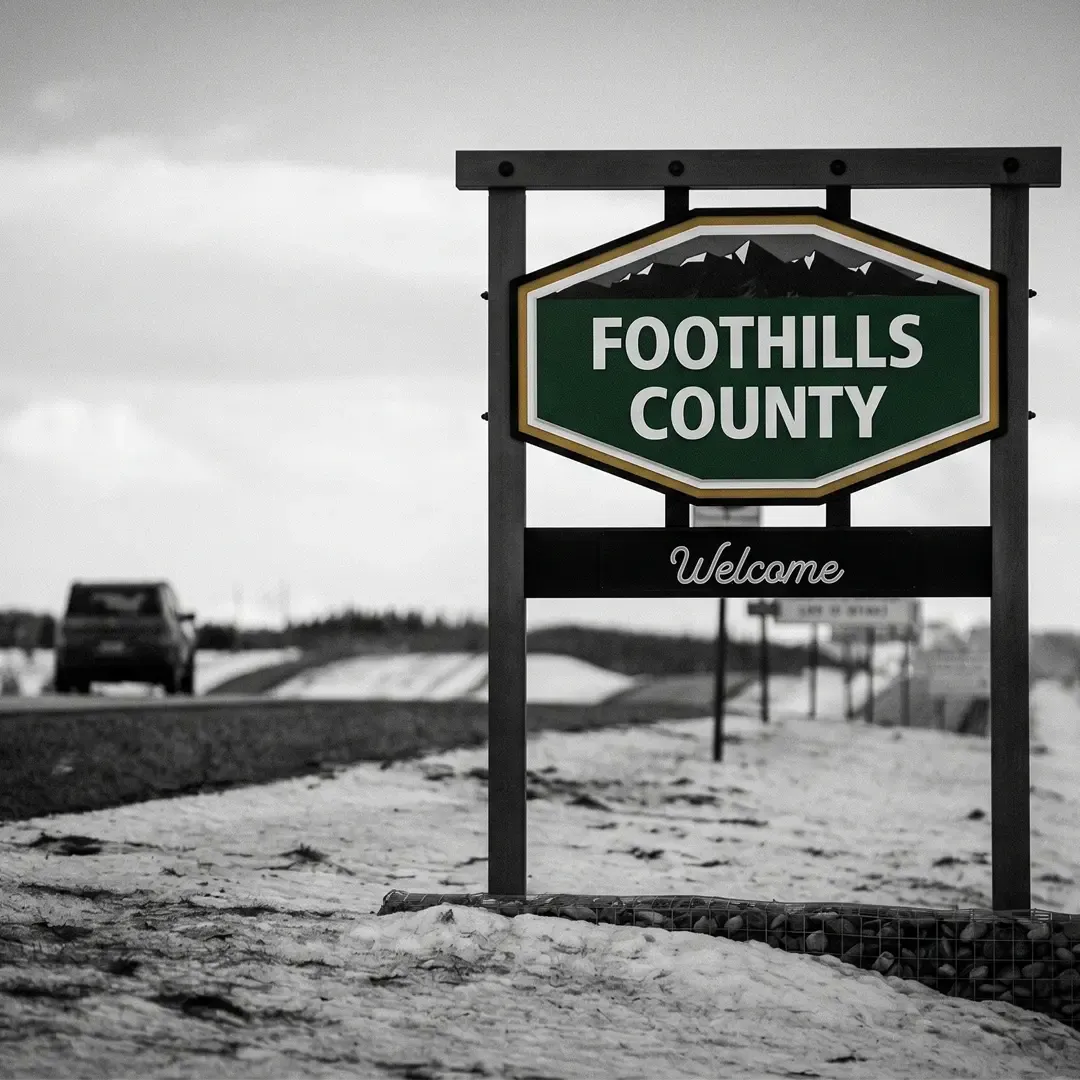
In dense urban centers like Calgary or Edmonton, a surveillance investigator can blend seamlessly into rows of parked vehicles, delivery traffic, and bustling street corners. Foothills County, however, plays by entirely different rules. On a quiet gravel range road west of Okotoks or south of Priddis, an unfamiliar vehicle parked on an approach does not go unnoticed—it draws immediate scrutiny from local ranchers, acreage owners, and passing patrol vehicles.
Conducting covert rural surveillance requires an Alberta private investigator to trade standard municipal tactics for environmental tradecraft, predictive grid positioning, and extreme standoff distances. When a single mistake can burn a file permanently, executing surveillance across rural Alberta is a disciplined science.
1. Topography Masking and Static Vehicle Discipline
In acreage subdivisions and open agricultural parcels, driveway gates are frequently set hundreds of meters back from the main road, surrounded by wide-open sightlines. A novice investigator will park on a shoulder or pullout, immediately announcing their presence.
A seasoned surveillance investigator relies on topographical masking to vanish into the landscape:
- Silhouette Disruption: Vehicles are staged behind natural contour changes—such as coulee dips, gravel berms, and mature shelterbelt evergreens—preventing the vehicle’s profile from silhouetting against the horizon.
- Regional Blending: High-gloss, blacked-out city SUVs draw instant suspicion. Rural operations demand utilitarian, gravel-dusted trucks that match everyday agricultural and commercial traffic common to Foothills County.
- Total Cabin Blackout: Daytime running lights (DRLs), brake signals, and automatic interior displays are systematically disabled. Operating covertly requires complete thermal and light management inside the cabin to prevent windshield reflections and interior silhouettes.
2. The Dust Plume Dilemma: Parallel Grid Staging
The standard surveillance technique of trailing a subject three to four car lengths back is impossible on rural roads. On unpaved township and range roads, an accelerating vehicle kicks up a visible dust plume spanning half a kilometer. Tailing a subject directly behind that dust cloud either blinds the investigator or signals an obvious pursuit to the driver ahead.
To solve this, an experienced surveillance investigator leverages the surveyed road grid of southern Alberta:
- Parallel Corridor Running: Rather than tailing on the target’s specific range road, the investigator tracks the subject’s general direction from a parallel grid road one or two miles away.
- Predictive Bottlenecks: Investigators map out regional thoroughfares—such as Highway 22, Highway 2A, or bridge access points across the Highwood and Sheep Rivers—to set up static interception points before the target arrives.
- Two-Vehicle Coordination: On complex domestic, corporate, or insurance fraud cases, deploying an investigator duo provides maximum tactical flexibility. One investigator monitors the property perimeter while the second stages ahead at the nearest paved intersection, eliminating the need to pursue down gravel roads altogether.
3. Bridging the Half-Mile Gap with Extreme Telephoto Optics
In Foothills County, closing the distance to get a clear photograph with a standard handheld lens is an operational failure. If an investigator is close enough to read a licence plate with the naked eye, the subject is close enough to identify the investigator’s vehicle.
Securing undeniable proof across rolling acreage properties requires high-end optical rigs:
- Extreme Focal Lengths: Deploying stabilized 600mm to 1200mm optical configurations allows a surveillance investigator to capture facial expressions, subject physical activity, and vehicle details from several hundred meters away.
- Atmospheric & Heat Haze Compensation: Wide prairie landscapes generate severe heat mirage and crosswinds. High-calibre telephoto glass paired with customized vehicle-stabilization platforms ensures video remains crisp, steady, and free of focal distortion.
- Court-Admissible Evidence: Whether uncovering evidence for child custody disputes, corporate misconduct, or insurance fraud, all footage must adhere strictly to Alberta’s Personal Information Protection Act (PIPA) to ensure full admissibility in court.
The Value of Dedicated Rural Tradecraft
Surveillance in rural environments leaves zero margin for trial and error. The wide expanses, tight-knit rural communities, and brutal sightlines of Foothills County demand patience, advanced technology, and methodical planning.
When you retain an experienced Alberta private investigator, you are investing in deliberate tradecraft: precision planning that tracks movement, preserves absolute discretion, and secures court-ready evidence without ever revealing its presence.
Newsletter
Stay in the know
Get a behind-the-scenes look at the tactics and tech driving modern investigation and protection.
Talk to an investigator
Need answers? Talk to a licensed investigator.
Quick, no-obligation chat. Confidential, no-pressure support across Calgary, Edmonton, and all of Alberta.